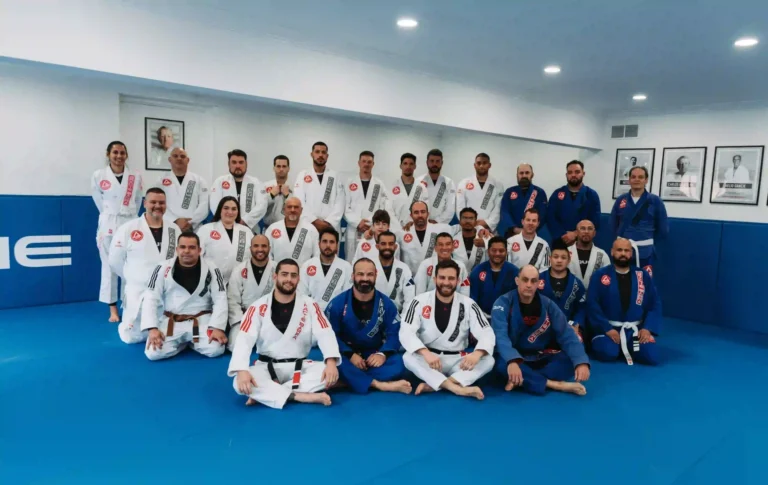

Should Your Child Step Onto the Competition Mat?
Parents in Burlington, MA often ask whether tournaments are right for a young grappler. Understanding the benefits of jiu-jitsu competition for kids shows that a match is less about medals and more about growth, courage, and learning under real pressure.
Competition is an optional extension of regular training, never a requirement. It works best when it builds on the consistent structure of kids and teens training programs, where coordination, focus, and respect always come first.

DISCOVER Gracie Barra Burlington
CLICK HEREBenefits of Jiu-Jitsu Competition for Kids on the Mat
In a tournament, children face a resisting partner they have never met, under a clock and a referee. That experience reveals what has truly been learned in class and what still needs attention.
Testing Technique Against Unfamiliar Partners
In class, kids drill and spar with teammates whose habits they already know. A tournament opponent moves differently, which forces a child to rely on solid fundamentals rather than memorized reactions.
This is why coaches see competition as a learning checkpoint. Much like the stripes and ranks outlined in the Brazilian Jiu-Jitsu belt system, a match offers clear feedback on progress without defining a child’s worth.
Learning to Perform Under Pressure
Nervousness before a match is normal, even for experienced athletes. Stepping onto the mat anyway teaches children that fear is a feeling to manage, not a signal to quit.
Over time, kids build simple routines that keep them calm: steady breathing, a short warm-up, and focusing on one first move. These habits often carry over to school tests, recitals, and other sports.
Building Real Problem-Solving Skills
Jiu-jitsu is often compared to physical chess. During a match, a child must recognize positions, choose an escape or an attack, and adjust quickly when the first plan does not work.
Win or lose, those split-second choices strengthen the same thinking skills kids use in the classroom: noticing patterns, staying patient, and trying a different approach when something is not working.
Understanding Rules and Fair Play
Kids divisions are typically organized by age, weight, and rank, and many rule sets restrict techniques that are unsafe for young bodies. Learning these rules teaches children to respect structure.
Young athletes also see referees enforce boundaries consistently. That reinforces a lesson parents value deeply: competing hard and competing fairly can, and should, happen at the same time.
How Competing Shapes Character Beyond the Tournament
The scoreboard stops when the match ends, but the lessons continue. Many families find that the most lasting benefits of jiu-jitsu competition for kids show up at home, at school, and in friendships.
Resilience After a Loss
Every competitor loses eventually. A loss handled with support shows a child that setbacks are temporary, and that the next step is simply to review, practice, and come back stronger.
This growth mindset reflects the spirit behind a new era of Brazilian Jiu-Jitsu in our community, where steady effort and personal improvement matter more than any single result.
Confidence Earned Through Effort
Confidence built on praise alone can be fragile. Confidence earned by preparing, showing up, and facing a real challenge tends to last, because the child knows exactly how it was earned.
Even a child who does not win can leave proud of finishing every match. That sense of accomplishment often motivates them to set new goals and train with more purpose.
Respect for Opponents and Coaches
Bowing in, shaking hands, and thanking the referee are part of every match. These rituals teach children to honor the person across from them, regardless of the outcome on the scoreboard.
Kids also learn to listen to coaching under stress and to trust the adults guiding them. That coachability is a valuable trait in sports, in school, and later in life.
Preparing Your Child for a First Jiu-Jitsu Tournament
Good preparation helps families enjoy the benefits of jiu-jitsu competition for kids without unnecessary stress. The goal is a child who feels ready, supported, and curious rather than anxious about results.
Choosing the Right Time to Start
There is no fixed age for a first tournament. Readiness depends on consistent attendance, a basic understanding of positions, and, most importantly, the child’s own interest in giving it a try.
Coaches can help parents judge the timing. Pushing a hesitant child too early may sour the experience, while waiting until they ask usually leads to a more enthusiastic debut.
Setting Goals Beyond Winning
Process goals keep the focus healthy. Examples include attempting a specific takedown, staying calm in a bad position, or simply completing every match with good sportsmanship.
When the conversation afterward centers on those goals, kids judge their day by effort and learning. That framing reduces pressure and keeps the sport fun for many seasons to come.
The Parent’s Role on Competition Day
Parents provide the emotional foundation. Arriving early, packing water and snacks, and keeping the mood light all help children feel secure in a busy, loud venue.
During matches, let the coach give technical instructions while you offer encouragement. Afterward, a simple “I loved watching you compete” often means more than any detailed analysis.
Guidance for Parents Considering Competition
Competition should complement regular classes, not replace them. Consistent training builds the technique and conditioning kids need, while occasional tournaments add checkpoints that reveal progress and spark fresh motivation.
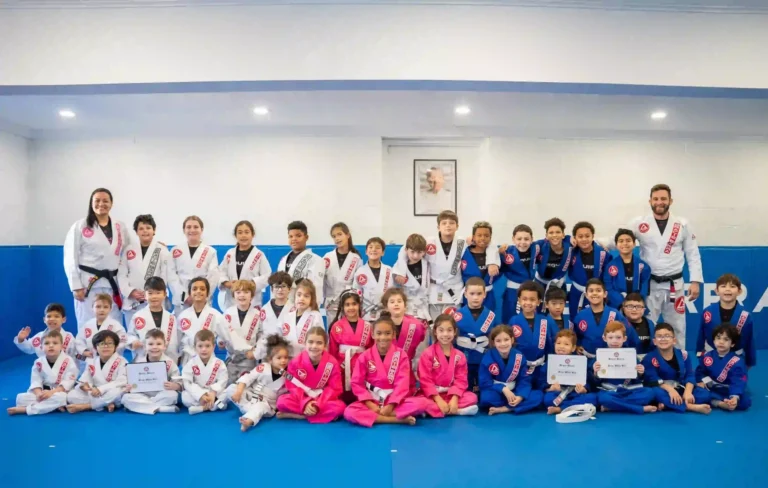
At Gracie Barra Burlington, kids training is designed to encourage coordination, focus, respect, confidence, and perseverance. Families can learn more about the academy’s mission and values before deciding what fits their child.
Putting Competition in Perspective
The real value of tournaments lies in what children bring home: composure under pressure, respect for others, and the resilience to keep improving after setbacks. Medals fade, but those qualities stay.
Start with a small local event, celebrate effort over outcome, and talk with coaches about next steps. A thoughtful approach turns every competition into one more lesson in the long journey of jiu-jitsu.

DISCOVER Gracie Barra Burlington
CLICK HEREFinal Thoughts on Kids and Jiu-Jitsu Competition
The benefits of jiu-jitsu competition for kids reach far beyond trophies. Guided by caring coaches and supportive parents, tournaments help young athletes grow more confident, disciplined, and resilient on and off the mat.
If your family in Burlington or nearby Woburn and Wilmington is exploring martial arts for your child, Gracie Barra Burlington welcomes you to learn more and become part of a growing local jiu-jitsu community.